Retaining Walls & Concrete Masonry
Strong, attractive walls that hold back soil, control erosion, and create usable space.
Why Retaining Walls Matter
Retaining walls serve both practical and aesthetic purposes on sloped properties. They hold back soil to create level areas for patios, driveways, gardens, and yards. Without proper retention, slopes erode over time, causing soil loss, drainage problems, and potential damage to structures below. A well-built retaining wall stops this erosion and transforms unusable hillsides into functional outdoor spaces. It also adds visual interest to your landscape with different levels and terraced areas.
Building retaining walls requires understanding soil mechanics, drainage, and structural engineering. Walls that are too weak or lack proper drainage will fail, sometimes catastrophically. The soil behind a retaining wall exerts significant pressure, especially when saturated with water. Engineers must account for these forces and design walls with adequate strength and drainage systems. This is not a project for amateurs or quick fixes. When you work with Atascadero A Town Concrete, you get professionals who understand these requirements and build walls that last.
Types of Retaining Walls
Choosing the Right Wall for Your Property
Different retaining wall systems work better for different situations. The choice depends on wall height, soil conditions, drainage requirements, budget, and aesthetic preferences. Here are the main types of retaining walls we build for residential and commercial properties in Atascadero:
- Concrete block walls using modular units that interlock for strength and stability
- Poured concrete walls with steel reinforcement for maximum strength and longevity
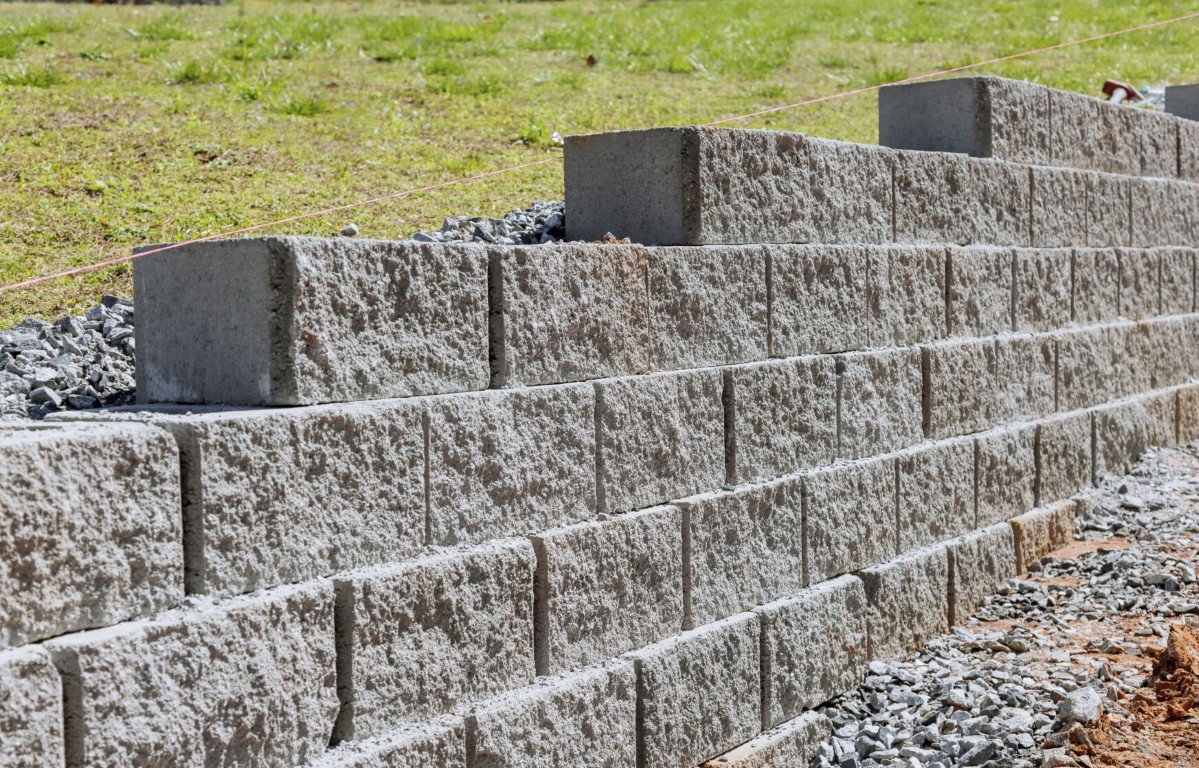
- Concrete masonry walls built with standard or decorative concrete blocks
- Segmental retaining walls using manufactured blocks designed for landscaping
- Gravity walls that rely on mass and weight to resist soil pressure
- Cantilevered walls with reinforced footings that extend into the ground
- Anchored walls using cables or deadmen driven deep into the hillside
- Terraced wall systems creating multiple levels on steep slopes
Each system has height limitations and specific site requirements. We evaluate your property and recommend the most appropriate and cost-effective solution. For walls over 4 feet tall, engineering calculations and permits are typically required. We coordinate with engineers and building departments to ensure compliance with all regulations.
Drainage and Long-Term Performance
The number one cause of retaining wall failure is poor drainage. Water builds up behind the wall, creating hydrostatic pressure that can push the wall over or cause it to crack and fail. Proper drainage design is not optional. It is essential for any retaining wall that will last. We install drainage systems that channel water away from the wall and prevent buildup. This typically includes gravel backfill, perforated drain pipes, and weep holes that allow water to escape.
Beyond drainage, long-term performance depends on quality construction and proper materials. The foundation must be solid and level. Blocks or forms must be set accurately. Reinforcement must be placed according to engineering specifications. Backfill must be compacted properly to prevent settling. These details matter because shortcuts lead to problems down the road. We follow industry best practices and manufacturer guidelines to ensure your retaining wall performs well for decades. If you also need foundation work or commercial masonry projects, we bring the same level of expertise and quality to those applications as well.
Frequently Asked Questions
Ready to Build Your Retaining Wall?
Contact us for a site evaluation and quote. We will help you design a wall that solves your slope problems.